
Lawrence Park Real Estate: Toronto’s Garden Suburb
Tudor Revival architecture, curving tree-lined streets, and some of the best schools in Toronto. Lawrence Park is one of the city’s most established and prestigious residential addresses — and one of the most common starting points for families thinking about what comes next.
Talk to Us About Lawrence Park
Buying, selling, or thinking about your next move. Let’s have an honest conversation.
Or call 416-486-8282
What is Lawrence Park Toronto known for?
Lawrence Park is known as one of Toronto’s earliest and most prestigious garden suburbs, developed from 1908 by the Dovercourt Land Company under Wilfrid S. Dinnick. The neighbourhood is defined by Tudor Revival, Georgian, and English Cottage architecture from the 1910s to 1940s, curving tree-lined streets, generous lots, mature tree canopy, and proximity to Blythwood Ravine, Chatsworth Ravine, and Alexander Muir Memorial Gardens. It consistently ranks among the most desirable and expensive residential addresses in the city, with average detached home prices of $3,471,000 as of Q3 2025 (TRREB).
For families who have lived here for 20 or 30 years, it’s also one of the most common starting points for downsizing conversations. The home that was perfect when the kids were young is now a lot to maintain. The equity is significant. What comes next is the question — and the answer usually starts with an honest look at what the property is worth and what the right next move looks like.
Thinking about selling your Lawrence Park home? Our Complete Toronto Downsizing Guide walks through timelines, market value, neighbourhood options, and the questions families most often wish they’d asked earlier. Read it before we talk.
What is the difference between Lawrence Park and Lawrence Park South?
This is one of the more confusing distinctions in Toronto real estate. Here’s the honest answer.
When most buyers say “Lawrence Park,” they mean the historical garden suburb developed from 1908 by the Dovercourt Land Company. That area runs from Avenue Road east to Yonge Street, from Lawrence Avenue south to Blythwood Ravine and Alexander Muir Memorial Gardens. Yonge Street is the eastern boundary. This is the area with the curving crescents, the Tudor Revival architecture, and the ravine-adjacent properties that define Lawrence Park’s reputation.
The City of Toronto’s official neighbourhood designation — “Lawrence Park South” — is a broader area that extends further west toward Bathurst and south toward Eglinton, encompassing more of the Allenby and Forest Hill edges. This is what Statistics Canada and the City use for data purposes. The core character most buyers are looking for sits in the tighter area between Avenue Road and Yonge.
For practical real estate purposes:
- The historical garden suburb (Avenue Road to Yonge, Lawrence to Blythwood) — predominantly detached heritage homes, low turnover, $3M+ pricing
- The broader Lawrence Park South area (extending west toward Bathurst and south toward Eglinton) — more diverse property types, some condos, connects to the Yonge and Eglinton market
- Lawrence Park North — the City designation for the area north of Lawrence Avenue extending toward Sheppard, between Yonge and Bayview
When we describe Lawrence Park to buyers, we’re clear about which area we mean. Knowing which side of these boundaries you’re on affects pricing, school catchments, and transit access.
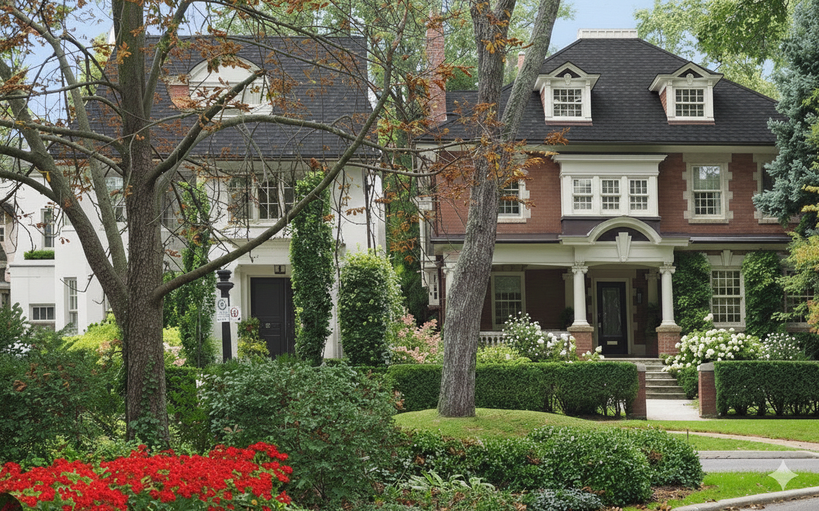
The curving, tree-lined streets of the historical Lawrence Park garden suburb, west of Yonge Street between Avenue Road and Yonge.
Transit and walkability in Lawrence Park
Primarily car-dependent due to its residential character, but considerably more accessible than comparable suburban areas thanks to Line 1 access and Yonge Street service.
Interior streets to Yonge
Excellent Transit
~22 min to Union
Via Yonge Street north
Transit Access
- Lawrence Station (Line 1 Yonge-University) — rapid access to downtown and North York Centre
- Eglinton Station also accessible for residents in the southern part of Lawrence Park South
- Frequent bus routes on Yonge, Lawrence, Avenue Road, and Mount Pleasant Road — approximately 8 routes serve the area
- Multiple 24-hour routes on Yonge Street for late-night access
Driving & Car Access
- Highway 401 on-ramp approximately 10 minutes by car via Yonge Street
- Don Valley Parkway accessible via the 401 interchange, though most residents commute primarily via Yonge Street and the subway
- Lawrence Park is primarily car-oriented — most households have at least one vehicle
- Parking on residential streets is generally available, though school-adjacent streets are congested at drop-off and pick-up times
What is the average house price in Lawrence Park Toronto?
As of Q3 2025, the average sold price for detached homes in Lawrence Park South was $3,471,000, with properties selling at 96% of asking price and averaging 37 days on market. Condo sales averaged $1,158,000. All property types combined averaged $2,987,930, with 43 properties sold from 94 new listings during the quarter. Source: TRREB Statistics, Q3 2025.

We walk you through current market conditions before you make any decisions — buying or selling.
The price range in Lawrence Park reflects significant variation. Lot size, ravine adjacency, condition, and whether the home is an original heritage property, a renovation, or a custom rebuild all move the number considerably. Properties on prestige crescents or with ravine views command meaningful premiums over comparable street-facing homes.
What the market numbers actually mean:
- 96% of asking price — this is a balanced market with limited room for lowball offers on well-priced properties
- 37 days on market for detached — longer than core Toronto, reflecting a buyer pool that is smaller but highly qualified
- Custom rebuilds: $450–$650+ per sq ft for construction only, plus design, permits, HST, and 10–15% contingency — total costs run well above the construction line item
- Ravine properties require Conservation Toronto approval — get a survey before making an offer on any lot touching the ravine system
- Limited condo and semi-detached inventory within the historical garden suburb; condo supply concentrates toward Yonge and Eglinton
Schools serving Lawrence Park — what families need to know
Lawrence Park has some of the most sought-after school catchments in Toronto. But the boundaries are specific, and where you are within the broader area determines which school your child attends. Always confirm catchment with TDSB before purchasing.
Public schools (TDSB) — Lawrence Park core (Avenue Road to Yonge):
- Blythwood Junior Public School (JK–6) — primary feeder for the core Lawrence Park area
- Lawrence Park Collegiate Institute (Grades 9–12) — one of Toronto’s top-rated public secondary schools
- Northern Secondary School — alternative secondary option nearby
- North Toronto Collegiate Institute — secondary option for parts of Lawrence Park South
Public schools (TDSB) — broader Lawrence Park South area:
- John Ross Robertson Junior Public School
- Allenby Junior Public School
- Glenview Senior Public School
- Forest Hill Junior and Senior Public School
Catholic schools (TCDSB):
- Blessed Sacrament Catholic School (JK–8)
- Marshall McLuhan Catholic Secondary School (nearby)
- Loretto Abbey CSS (nearby)
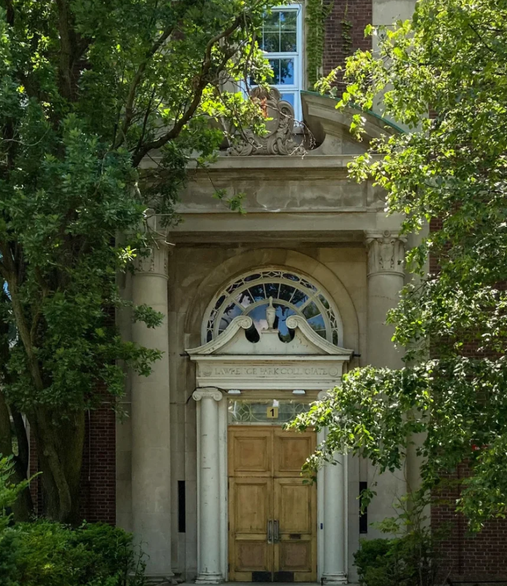
School catchment is one of the primary drivers of demand in Lawrence Park. Know the boundaries before you make an offer.
Independent Schools
- Havergal College — girls’ school, directly in the area
- St. Clement’s School — girls’ school, Lawrence Park South
- Toronto French School (TFS) — co-ed, close proximity
- Crescent School — boys’ school, nearby
- Blyth Academy — alternative secondary, Lawrence Park location
- Bishop Strachan School, Upper Canada College — nearby options
A Note on School Boundaries
Lawrence Park Collegiate Institute is the public secondary school most buyers are specifically targeting. The catchment area is specific — not every property in “Lawrence Park” falls within it. If LPCI is a deciding factor in your purchase, confirm the exact address with the TDSB School Finder tool before you make an offer. We flag this in every buyer conversation we have in this area.
Green space and outdoor life in Lawrence Park
The garden suburb character of Lawrence Park is not just marketing language. The ravine access, mature canopy, and park density are genuine and measurable. This is one of the best-parked neighbourhoods in midtown Toronto.
Ravines & Gardens
- Alexander Muir Memorial Gardens — formal gardens and ravine trails on the southern boundary, the defining green space of Lawrence Park proper
- Blythwood Ravine — natural ravine forming the southern edge of the historical garden suburb
- Chatsworth Ravine — additional ravine system within the broader Lawrence Park area
Parks & Trails
- Sherwood Park — wading pools, walking and running trails, off-leash dog area, large playground, picnic facilities, and public washrooms
- Lytton Park — in the adjacent Lytton Park neighbourhood to the west, accessible to Lawrence Park residents
- Lawrence Park itself — community park within the neighbourhood
- Kay Gardner Beltline Trail — multi-use walking and cycling trail connecting to the broader city trail network
Recreation & Facilities
- Sherwood Park community facilities — sports fields and tennis courts adjacent to the ravine system
- North Toronto Memorial Community Centre — pools, gyms, and programming in nearby Davisville Village
- Multiple TTC-accessible community centres for broader programming needs
- Two public library branches within the neighbourhood
The architecture of Lawrence Park — what you’re actually buying
The architectural character of Lawrence Park is genuinely distinctive. It was designed that way from the start, and it has held remarkably well for over a century.
Historical Character (1910s–1940s)
The Dovercourt Land Company planned Lawrence Park as a model garden suburb from the outset — curving streets, setback requirements, architectural covenants, and deliberate tree planting. The predominant styles are Tudor Revival, Georgian, English Cottage, and Colonial. Most original construction dates from 1910 to the late 1940s. Lot sizes are generous by Toronto standards, and the setbacks and mature canopy create a streetscape that is difficult to replicate in newer neighbourhoods.
Custom Rebuilds & the “Monster Homes” Question
Like much of Toronto’s midtown, Lawrence Park has seen teardown activity over the past 30 years — smaller original homes replaced by larger custom builds. Unlike some neighbourhoods where this has changed the streetscape significantly, Lawrence Park’s lot coverage restrictions and community association oversight have limited the most jarring changes. That said, buyers should expect to find streets where a 1930s Tudor Revival sits next to a 2015 custom build.
Custom rebuild costs: $450–$650+ per sq ft for construction only. Full projects including design, permits, carrying costs, and HST run considerably higher. Timelines are 12–18+ months, and ravine-adjacent properties require Conservation Toronto approvals that can extend that significantly.
Who is Lawrence Park actually right for — and who should look elsewhere
Lawrence Park is genuinely right for:
- Buyers who want one of Toronto’s most prestigious addresses and have the budget for it — $3.5M+ for a detached home is the floor, not an outlier
- Families targeting Lawrence Park Collegiate Institute or the private school cluster nearby — school access is a primary driver of demand here
- Buyers treating the purchase as a long-term hold — Lawrence Park has exceptional value retention and minimal development pressure
- Professionals who want Line 1 subway access paired with a genuinely quiet, established residential character
- Anyone who values architectural heritage and isn’t willing to compromise on streetscape quality
The real drawbacks — don’t skip this:
- Price is the primary barrier. $3.47M average detached puts Lawrence Park out of reach for most Toronto buyers, and inventory is consistently limited
- Condo and semi-detached options barely exist in the historical garden suburb. If you need a condo, you’re looking at the Yonge and Eglinton edge, not Lawrence Park proper
- Custom rebuilds are a significant undertaking — capital-intensive, time-consuming, and complicated further by ravine setback rules
- Commercial amenities within the neighbourhood are limited. Yonge and Lawrence Village covers the basics, but larger grocery, pharmacy, and retail require a drive or subway trip
- School-adjacent streets experience significant traffic congestion at drop-off and pick-up times during the school year
Lawrence Park vs. Rosedale
Both rank among Toronto’s most prestigious addresses. Rosedale has larger lots and a more exclusively residential character. Lawrence Park has better transit access — Line 1 at Lawrence vs. Castle Frank or Summerhill in Rosedale. Lawrence Park also has more commercial activity on Yonge Street. Both are comparable in price. Choose based on which character resonates more.
Lawrence Park vs. Leaside
Leaside offers a similar affluent, family-oriented feel with excellent schools at meaningfully lower prices — Leaside averages around $2M for detached vs. $3.47M here. Leaside has more walkable commercial amenities on Bayview and a stronger condo market for downsizers. Lawrence Park has more prestige, more heritage architecture, and larger lots. The choice often comes down to budget and how much the architectural character matters to you.
Lawrence Park vs. Yonge & Eglinton
If you want a condo with true walkability, Yonge and Eglinton delivers what Lawrence Park cannot. Many Lawrence Park families downsize to Yonge and Eglinton precisely because it gives them city convenience without requiring a long move. For downsizers, this transition is often the first conversation we have — what Lawrence Park equity buys you at Yonge and Eglinton is a genuinely excellent condo with zero maintenance overhead.
Why families trust Othen Group
More than 90 five-star Google reviews, many from clients navigating complex life transitions. Here’s what they say.
Above and Beyond
“Jacquie and her team of professionals are in my opinion the best in Toronto. She sold my home in a timely fashion and supported me throughout the whole process — every step of the way by going above and beyond and relating to me as if she was my own daughter.”
Google Review — Toronto
Trust and Professionalism
“She emanates a sense of trustworthiness that makes you feel very secure during what is without a doubt a very involved process. Jacquie is a true professional in every sense of the word, and puts her clients interests far above her own.”
Google Review — Toronto
Guided Through the Stress
“Jacquie and her team are awesome and they patiently guided us through this stressful transaction. I would have no hesitation in recommending Jacquie to any of my friends and family.”
Google Review — Toronto
Sold Above Asking
“With their help, our house sold almost immediately, for a little over asking. The whole team was incredibly responsive and professional from start to finish. We can’t thank them enough!”
Google Review — Toronto
Other midtown and North Toronto neighbourhoods
Lawrence Park doesn’t fit every buyer or every life stage. These are the neighbourhoods we recommend most often to people who start with Lawrence Park and end up somewhere else.
Leaside
Similar family-oriented character with excellent schools at lower price points. Strong Bayview Avenue commercial strip. A common alternative for buyers whose budget stops short of Lawrence Park’s $3.5M floor.
Yonge & Eglinton
The most common destination for Lawrence Park homeowners downsizing. Exceptional walkability, condo density, and transit access. What Lawrence Park equity buys here is genuinely impressive.
Don Mills
Ontario Line access, CF Shops at Don Mills, and a mix of condos, townhomes, and detached homes. A strong alternative for buyers who want the midtown character without midtown pricing.
Summerhill
Quieter than Yonge and Eglinton with strong transit access. A neighbourhood-feel alternative for downsizers who want walkability without the density of a major intersection.
Willowdale
High-rise condo density along Yonge north of Sheppard. Strong schools including Earl Haig SS. The most affordable entry point for buyers who want midtown character with North York pricing.
Downsizing in Toronto
Selling a Lawrence Park family home is one of the most significant financial decisions most homeowners make. Read our complete downsizing guide before you decide anything.
Common Questions About Lawrence Park Real Estate
What is the average house price in Lawrence Park Toronto?
Detached homes in Lawrence Park South averaged $3,471,000 in Q3 2025 (TRREB). Properties sold at 96% of asking price with an average of 37 days on market. Condo sales averaged $1,158,000, though condo inventory is concentrated toward the Yonge and Eglinton edge of the broader area, not the core garden suburb.
What is the difference between Lawrence Park and Lawrence Park South?
Lawrence Park (the historical garden suburb) runs from Avenue Road east to Yonge Street, from Lawrence Avenue south to Blythwood Ravine. Lawrence Park South is the broader City designation extending further west toward Bathurst and south toward Eglinton. The historical core between Avenue Road and Yonge has the Tudor Revival architecture and curving crescents most buyers are specifically looking for.
Should I renovate or rebuild in Lawrence Park?
The decision depends on the existing structure’s condition, lot size, budget, and your timeline. Custom rebuilds cost $450–$650+ per sq ft for construction only and take 12–18+ months. Ravine-adjacent properties require Conservation Toronto approvals. We compare total project costs against renovation alternatives and resale impact before you commit to either path.
Is Lawrence Park Collegiate Institute in the Lawrence Park catchment?
LPCI serves a defined catchment area that does not include every property marketed as “Lawrence Park.” If attendance at LPCI is a deciding factor in your purchase, confirm the exact address with the TDSB School Finder before making an offer. Do not rely on neighbourhood marketing language — the catchment boundary matters, not the neighbourhood name.
Are there condo options in Lawrence Park?
Very limited within the historical garden suburb. The neighbourhood is predominantly detached homes on generous lots. More condo inventory is available toward Yonge and Eglinton to the south or along the Yonge corridor. Many Lawrence Park homeowners downsizing choose to move to Yonge and Eglinton condos specifically because the walkability and transit access are significantly better there.
Is Lawrence Park a good neighbourhood to sell in?
Lawrence Park consistently attracts qualified buyers for well-presented homes. The 96% sale-to-list ratio means pricing correctly from the start is critical — overpriced homes sit. The limited inventory means presentation, staging, and timing all move the final number. We include professional staging at no cost through Kelly Allan Design for every home we list.
Thinking About Lawrence Park? Let’s Talk.
Whether you’re buying, planning a custom rebuild, or selling a home you’ve owned for decades — a 30-minute conversation gives you an honest picture of what your options actually look like and what to do first.
Or email: clientcare@othengroup.com
Lawrence Park Real Estate: Toronto's Garden Suburb
Tudor Revival architecture, curving tree-lined streets, and some of the best schools in Toronto. Lawrence Park is one of the city's most established and prestigious residential addresses — and one of the most common starting points for families thinking about what comes next.
Talk to Us About Lawrence Park
Buying, selling, or thinking about your next move. Let's have an honest conversation.
Or call 416-486-8282
What is Lawrence Park Toronto known for?
Lawrence Park is known as one of Toronto's earliest and most prestigious garden suburbs, developed from 1908 by the Dovercourt Land Company under Wilfrid S. Dinnick. The neighbourhood is defined by Tudor Revival, Georgian, and English Cottage architecture from the 1910s to 1940s, curving tree-lined streets, generous lots, mature tree canopy, and proximity to Blythwood Ravine, Chatsworth Ravine, and Alexander Muir Memorial Gardens. It consistently ranks among the most desirable and expensive residential addresses in the city, with average detached home prices of $3,471,000 as of Q3 2025 (TRREB).
After almost 15 years working Toronto real estate, Lawrence Park is one of the neighbourhoods I recommend most often to buyers who want established prestige, genuine architectural character, and a garden suburb feel without leaving midtown. It's expensive. But for the right buyer looking for one of Toronto's finest addresses, it consistently delivers in ways that newer neighbourhoods simply can't.
For families who have lived here for 20 or 30 years, it's also one of the most common starting points for downsizing conversations. The home that was perfect when the kids were young is now a lot to maintain. The equity is significant. What comes next is the question — and the answer usually starts with an honest look at what the property is worth and what the right next move looks like.
Thinking about selling your Lawrence Park home? Our Complete Toronto Downsizing Guide walks through timelines, market value, neighbourhood options, and the questions families most often wish they'd asked earlier. Read it before we talk.
What is the difference between Lawrence Park and Lawrence Park South?
This is one of the more confusing distinctions in Toronto real estate. Here's the honest answer.
When most buyers say "Lawrence Park," they mean the historical garden suburb developed from 1908 by the Dovercourt Land Company. That area runs from Avenue Road east to Yonge Street, from Lawrence Avenue south to Blythwood Ravine and Alexander Muir Memorial Gardens. Yonge Street is the eastern boundary. This is the area with the curving crescents, the Tudor Revival architecture, and the ravine-adjacent properties that define Lawrence Park's reputation.
The City of Toronto's official neighbourhood designation — "Lawrence Park South" — is a broader area that extends further west toward Bathurst and south toward Eglinton, encompassing more of the Allenby and Forest Hill edges. This is what Statistics Canada and the City use for data purposes. The core character most buyers are looking for sits in the tighter area between Avenue Road and Yonge.
For practical real estate purposes:
- The historical garden suburb (Avenue Road to Yonge, Lawrence to Blythwood) — predominantly detached heritage homes, low turnover, $3M+ pricing
- The broader Lawrence Park South area (extending further west toward Bathurst and south toward Eglinton) — more diverse property types, some condos, connects to the Yonge and Eglinton market
- Lawrence Park North — the City designation for the area north of Lawrence Avenue extending toward Sheppard, between Yonge and Bayview
When we describe Lawrence Park to buyers, we're clear about which area we mean. Knowing which side of these boundaries you're on affects pricing, school catchments, and transit access.
The curving, tree-lined streets of the historical Lawrence Park garden suburb, west of Yonge Street between Avenue Road and Yonge.
Transit and walkability in Lawrence Park
Primarily car-dependent due to its residential character, but considerably more accessible than comparable suburban areas thanks to Line 1 access and Yonge Street service.
Interior streets to Yonge
Excellent Transit
~22 min to Union
Via Yonge Street north
Transit Access
- Lawrence Station (Line 1 Yonge-University) — rapid access to downtown and North York Centre
- Eglinton Station also accessible for residents in the southern part of Lawrence Park South
- Frequent bus routes on Yonge, Lawrence, Avenue Road, and Mount Pleasant Road — approximately 8 routes serve the area
- Multiple 24-hour routes on Yonge Street for late-night access
Driving & Car Access
- Highway 401 on-ramp approximately 10 minutes by car via Yonge Street
- Don Valley Parkway accessible via the 401 interchange, though most Lawrence Park residents commute primarily via Yonge Street and the subway
- Lawrence Park is primarily car-oriented — most households have at least one vehicle
- Parking on residential streets is generally available, though school-adjacent streets are congested at drop-off and pick-up times
What is the average house price in Lawrence Park Toronto?
As of Q3 2025, the average sold price for detached homes in Lawrence Park South was $3,471,000, with properties selling at 96% of asking price and averaging 37 days on market. Condo sales averaged $1,158,000. All property types combined averaged $2,987,930, with 43 properties sold from 94 new listings during the quarter. Source: TRREB Statistics, Q3 2025.
We walk you through current market conditions before you make any decisions — buying or selling.
The price range in Lawrence Park reflects significant variation. Lot size, ravine adjacency, condition, and whether the home is an original heritage property, a renovation, or a custom rebuild all move the number considerably. Properties on prestige crescents or with ravine views command meaningful premiums over comparable street-facing homes.
What the market numbers actually mean:
- 96% of asking price — this is a balanced market with limited room for lowball offers on well-priced properties
- 37 days on market for detached — longer than core Toronto, reflecting a buyer pool that is smaller but highly qualified
- Custom rebuilds: $450–$650+ per sq ft for construction only, plus design, permits, HST, and 10–15% contingency — total costs run well above the construction line item
- Ravine properties require Conservation Toronto approval — get a survey before making an offer on any lot touching the ravine system
- Limited condo and semi-detached inventory within the historical garden suburb; condo supply concentrates toward Yonge and Eglinton
Schools serving Lawrence Park — what families need to know
Lawrence Park has some of the most sought-after school catchments in Toronto. But the boundaries are specific, and where you are within the broader Lawrence Park area determines which school your child attends. Always confirm catchment with TDSB before purchasing.
Public schools (TDSB) — Lawrence Park core (Avenue Road to Yonge):
- Blythwood Junior Public School (JK–6) — primary feeder for the core Lawrence Park area
- Lawrence Park Collegiate Institute (Grades 9–12) — one of Toronto's top-rated public secondary schools
- Northern Secondary School — alternative secondary option nearby
- North Toronto Collegiate Institute — secondary option for parts of Lawrence Park South
Public schools (TDSB) — broader Lawrence Park South area:
- John Ross Robertson Junior Public School
- Allenby Junior Public School
- Glenview Senior Public School
- Forest Hill Junior and Senior Public School
Catholic schools (TCDSB):
- Blessed Sacrament Catholic School (JK–8)
- Marshall McLuhan Catholic Secondary School (nearby)
- Loretto Abbey CSS (nearby)
School catchment is one of the primary drivers of demand in Lawrence Park. Know the boundaries before you make an offer.
Independent Schools
- Havergal College — girls' school, directly in the area
- St. Clement's School — girls' school, Lawrence Park South
- Toronto French School (TFS) — co-ed, close proximity
- Crescent School — boys' school, nearby
- Blyth Academy — alternative secondary, Lawrence Park location
- Bishop Strachan School, Upper Canada College — nearby options
A Note on School Boundaries
Lawrence Park Collegiate Institute is the public secondary school most buyers are specifically targeting. The catchment area is specific — not every property in "Lawrence Park" falls within it. If LPCI is a deciding factor in your purchase, confirm the exact address with the TDSB School Finder tool before you make an offer. We flag this in every buyer conversation we have in this area.
Green space and outdoor life in Lawrence Park
The garden suburb character of Lawrence Park is not just marketing language. The ravine access, mature canopy, and park density are genuine and measurable. This is one of the best-parked neighbourhoods in midtown Toronto.
Ravines & Gardens
- Alexander Muir Memorial Gardens — formal gardens and ravine trails on the southern boundary. The defining green space of Lawrence Park proper
- Blythwood Ravine — natural ravine forming the southern edge of the historical garden suburb
- Chatsworth Ravine — additional ravine system within the broader Lawrence Park area
Parks & Trails
- Sherwood Park — wading pools, walking and running trails, off-leash dog area, large playground, picnic facilities, and public washrooms
- Lytton Park — in the adjacent Lytton Park neighbourhood to the west, accessible to Lawrence Park residents
- Lawrence Park itself — community park within the neighbourhood
- Kay Gardner Beltline Trail — multi-use walking and cycling trail connecting to the broader city trail network
Recreation & Facilities
- Sherwood Park community facilities — sports fields and tennis courts adjacent to the ravine system
- North Toronto Memorial Community Centre — pools, gyms, and programming in nearby Davisville Village
- Multiple TTC-accessible community centres for broader programming needs
- Two public library branches within the neighbourhood
The architecture of Lawrence Park — what you're actually buying
The architectural character of Lawrence Park is genuinely distinctive. It was designed that way from the start, and it has held remarkably well for over a century.
Historical Character (1910s–1940s)
The Dovercourt Land Company planned Lawrence Park as a model garden suburb from the outset — curving streets, setback requirements, architectural covenants, and deliberate tree planting. The predominant styles are Tudor Revival, Georgian, English Cottage, and Colonial. Most original construction dates from 1910 to the late 1940s. Lot sizes are generous by Toronto standards, and the setbacks and mature canopy create a streetscape that is difficult to replicate in newer neighbourhoods.
Custom Rebuilds & the "Monster Homes" Question
Like much of Toronto's midtown, Lawrence Park has seen teardown activity over the past 30 years — smaller original homes replaced by larger custom builds. Unlike some neighbourhoods where this has changed the streetscape significantly, Lawrence Park's lot coverage restrictions and community association oversight have limited the most jarring changes. That said, buyers should expect to find streets where a 1930s Tudor Revival sits next to a 2015 custom build. It's part of the current reality of the neighbourhood.
Custom rebuild costs: $450–$650+ per sq ft for construction only. Full projects including design, permits, carrying costs, and HST run considerably higher. Timelines are 12–18+ months, and ravine-adjacent properties require Conservation Toronto approvals that can extend that significantly.
Who is Lawrence Park actually right for — and who should look elsewhere
Lawrence Park is genuinely right for:
- Buyers who want one of Toronto's most prestigious addresses and have the budget for it — $3.5M+ for a detached home is the floor, not an outlier
- Families targeting Lawrence Park Collegiate Institute or the private school cluster nearby — school access is a primary driver of demand here
- Buyers treating the purchase as a long-term hold — Lawrence Park has exceptional value retention and minimal development pressure
- Professionals who want Line 1 subway access paired with a genuinely quiet, established residential character
- Anyone who values architectural heritage and isn't willing to compromise on streetscape quality
The real drawbacks — don't skip this:
- Price is the primary barrier. $3.47M average detached puts Lawrence Park out of reach for most Toronto buyers, and inventory is consistently limited
- Condo and semi-detached options barely exist in the historical garden suburb. If you need a condo, you're looking at the Yonge and Eglinton edge, not Lawrence Park proper
- Custom rebuilds are a significant undertaking — capital-intensive, time-consuming, and complicated further by ravine setback rules
- Commercial amenities within the neighbourhood are limited. Yonge and Lawrence Village covers the basics, but larger grocery, pharmacy, and retail require a drive or subway trip
- School-adjacent streets (Blythwood, Lawrence Park, Allenby) experience significant traffic congestion at drop-off and pick-up times during the school year
Lawrence Park vs. Rosedale
Both rank among Toronto's most prestigious addresses. Rosedale has larger lots and a more exclusively residential character. Lawrence Park has better transit access — Line 1 at Lawrence vs. Castle Frank or Summerhill in Rosedale. Lawrence Park also has more commercial activity on Yonge Street. Both are comparable in price. Choose based on which character resonates more.
Lawrence Park vs. Leaside
Leaside offers a similar affluent, family-oriented feel with excellent schools at meaningfully lower prices — Leaside averages around $2M for detached vs. $3.47M here. Leaside has more walkable commercial amenities on Bayview and a stronger condo market for downsizers. Lawrence Park has more prestige, more heritage architecture, and larger lots. The choice often comes down to budget and how much the architectural character matters to you.
Lawrence Park vs. Yonge & Eglinton
If you want a condo with true walkability, Yonge and Eglinton delivers what Lawrence Park cannot. Many Lawrence Park families downsize to Yonge and Eglinton precisely because it gives them city convenience without requiring a long move. For downsizers, this transition is often the first conversation we have — what Lawrence Park equity buys you at Yonge and Eglinton is a genuinely excellent condo with zero maintenance overhead.
Why families trust Othen Group
More than 90 five-star Google reviews, many from clients navigating complex life transitions. Here's what they say.
Above and Beyond
"Jacquie and her team of professionals are in my opinion the best in Toronto. She sold my home in a timely fashion and supported me throughout the whole process — every step of the way by going above and beyond and relating to me as if she was my own daughter."
Google Review — Toronto
Trust and Professionalism
"She emanates a sense of trustworthiness that makes you feel very secure during what is without a doubt a very involved process. Jacquie is a true professional in every sense of the word, and puts her clients interests far above her own."
Google Review — Toronto
Guided Through the Stress
"Jacquie and her team are awesome and they patiently guided us through this stressful transaction. I would have no hesitation in recommending Jacquie to any of my friends and family."
Google Review — Toronto
Sold Above Asking
"With their help, our house sold almost immediately, for a little over asking. The whole team was incredibly responsive and professional from start to finish. We can't thank them enough!"
Google Review — Toronto
Other midtown and North Toronto neighbourhoods
Lawrence Park doesn't fit every buyer or every life stage. These are the neighbourhoods we recommend most often to people who start with Lawrence Park and end up somewhere else.
Leaside
Similar family-oriented character with excellent schools at lower price points. Strong Bayview Avenue commercial strip. A common alternative for buyers whose budget stops short of Lawrence Park's $3.5M floor.
Yonge & Eglinton
The most common destination for Lawrence Park homeowners downsizing. Exceptional walkability, condo density, and transit access. What Lawrence Park equity buys here is genuinely impressive.
Don Mills
Ontario Line access, CF Shops at Don Mills, and a mix of condos, townhomes, and detached homes. A strong alternative for buyers who want the midtown character without midtown pricing.
Summerhill
Quieter than Yonge and Eglinton with strong transit access. A neighbourhood-feel alternative for downsizers who want walkability without the density of a major intersection.
Willowdale
High-rise condo density along Yonge north of Sheppard. Strong schools including Earl Haig SS. The most affordable entry point for buyers who want midtown character with North York pricing.
Downsizing in Toronto
Selling a Lawrence Park family home is one of the most significant financial decisions most homeowners make. Read our complete downsizing guide before you decide anything.
Common Questions About Lawrence Park Real Estate
What is the average house price in Lawrence Park Toronto?
Detached homes in Lawrence Park South averaged $3,471,000 in Q3 2025 (TRREB). Properties sold at 96% of asking price with an average of 37 days on market. Condo sales averaged $1,158,000, though condo inventory is concentrated toward the Yonge and Eglinton edge of the broader area, not the core garden suburb.
What is the difference between Lawrence Park and Lawrence Park South?
Lawrence Park (the historical garden suburb) runs from Avenue Road east to Yonge Street, from Lawrence Avenue south to Blythwood Ravine and Alexander Muir Memorial Gardens. Yonge is the eastern boundary. Lawrence Park South is the broader City of Toronto neighbourhood designation that extends further west toward Bathurst and south toward Eglinton. The historical core between Avenue Road and Yonge has the Tudor Revival architecture and curving crescents most buyers are specifically looking for.
Should I renovate or rebuild in Lawrence Park?
The decision depends on the existing structure's condition, lot size, budget, and your timeline. Custom rebuilds cost $450–$650+ per sq ft for construction only and take 12–18+ months. Ravine-adjacent properties require Conservation Toronto approvals that can extend this significantly. We compare total project costs against renovation alternatives and resale impact before you commit to either path.
Is Lawrence Park Collegiate Institute in the Lawrence Park catchment?
LPCI serves a defined catchment area that does not include every property marketed as "Lawrence Park." If attendance at LPCI is a deciding factor in your purchase, confirm the exact address with the TDSB School Finder before making an offer. Do not rely on neighbourhood marketing language — the catchment boundary matters, not the neighbourhood name.
Are there condo options in Lawrence Park?
Very limited within the historical garden suburb. The neighbourhood is predominantly detached homes on generous lots. More condo inventory is available toward Yonge and Eglinton to the south or along the Yonge corridor. Many Lawrence Park homeowners downsizing choose to move to Yonge and Eglinton condos specifically because the walkability and transit access are significantly better there.
Is Lawrence Park a good neighbourhood to sell in?
Lawrence Park consistently attracts qualified buyers for well-presented homes. The 96% sale-to-list ratio means pricing correctly from the start is critical — overpriced homes sit. The limited inventory means presentation, staging, and timing all move the final number. We include professional staging at no cost through Kelly Allan Design for every home we list, which is one of the most tangible differences in outcome we can point to.
Thinking About Lawrence Park? Let's Talk.
Whether you're buying, planning a custom rebuild, or selling a home you've owned for decades — a 30-minute conversation gives you an honest picture of what your options actually look like and what to do first.
Or email: clientcare@othengroup.com
MARKET SNAPSHOT
(OCT 12, 2026 - NOV 11, 2026)
MARKET SNAPSHOT

Market Trends