
Willowdale, Toronto: Urban Convenience, Neighbourhood Roots
Three subway stations. Earl Haig Secondary School. One of Toronto's most diverse culinary strips. Original post-war bungalows next to glass condos reaching 40 storeys. Willowdale is North York's urban core — and it rewards buyers who understand exactly what they're getting into.
Talk to Us About Willowdale
Buying, selling, or downsizing in North York — we know this market.
Or call 416-486-8282
What is Willowdale in Toronto?
Willowdale is a neighbourhood in North York, Toronto, centred around the intersection of Yonge Street and Sheppard Avenue. It is served by three Line 1 subway stations (North York Centre, Sheppard-Yonge, and Finch West) and connects to Line 4 (Sheppard) at Sheppard-Yonge. The neighbourhood is officially divided by the City of Toronto into Willowdale West (west of Yonge) and Willowdale East (east of Yonge), with a combined population of approximately 34,000. Housing ranges from original post-war bungalows and custom-built homes on quiet residential streets to high-rise condominiums along the Yonge Street corridor. It has a Walk Score of 86 and Transit Score of 84. It is one of Toronto's most multicultural communities, with over 55% of residents in Willowdale West identifying as immigrants. Average sold prices as of early 2026: approximately $1,037,000 in Willowdale West and $969,000 in Willowdale East.
The Yonge and Sheppard intersection is the commercial and transit heart of the neighbourhood. Empress Walk, the North York Civic Centre, Mel Lastman Square, and the North York Central Library are all within blocks of the subway. The Yonge Street strip running north toward Finch is lined with an unusually good concentration of independent restaurants — Korean, Persian, Chinese, Japanese — reflecting a community where multicultural character isn't a marketing line but a daily reality.
Two stops north, Finch Station provides connections to GO Transit and York Region Transit. The proposed Yonge North Subway Extension will push Line 1 further north from Finch, adding stations at Cummer, Steeles, Clark, Highway 7, and Richmond Hill Centre. When complete, it will strengthen Willowdale's position as a transit hub even further — and that has real implications for property values in the northern portions of the neighbourhood.
Selling a Willowdale bungalow and downsizing to a condo? This is one of the most common transitions we handle. See our Toronto Downsizing Guide for everything you need to know about timing, costs, and what the transition actually looks like.
Why is it called Willowdale?
Willowdale takes its name from the "Willow Dale" post office established in the mid-1800s by David Gibson, named after the many willow trees that once covered the area. Gibson was a distinguished land surveyor who participated in the Upper Canada Rebellion of 1837, was charged with high treason, and fled to the United States before returning in 1851 after a pardon. The neighbourhood had previously been known as Kummer's Settlement, after Jacob Cummer — a mill owner, tinsmith, and self-taught doctor who settled here from the United States in 1797 and is considered Willowdale's first settler. Cummer Avenue is named in his honour.
Gibson House — 5172 Yonge Street
David Gibson's farmhouse, built in 1851 in the Georgian Revival style, still stands at 5172 Yonge Street and operates as a historic house museum. It is one of the few remaining physical connections to Willowdale's pre-urban past — sitting on Yonge Street surrounded by the condo towers and commercial development that arrived over a century later. Worth visiting if you're new to the neighbourhood and want to understand what was here before the high-rises.
Members of the Gibson family lived in the house until the 1920s, when residential subdivision of Willowdale began in earnest. The post-war bungalow era that followed — the 1940s through 1960s — produced the housing stock that is now being sold by seniors and replaced by the large custom homes that define much of the residential streetscape today.
The "Monster Homes" Origin
Willowdale is where the term "monster homes" was first used in Toronto. Beginning in the 1990s, the neighbourhood's large lots made it a primary target for teardown-and-rebuild activity: original 1,200 sq ft bungalows replaced by 4,000–5,000 sq ft two-storey custom homes built to the lot lines. The community response to this transformation — neighbourhood associations pushing back on setback variances and building heights — produced the city-wide conversation about infill development that continues today.
For buyers, this history explains the current streetscape: blocks where original bungalows, renovated mid-century homes, and brand-new luxury builds sit side by side. The streetscape is uneven not because planning failed, but because the neighbourhood is in a decades-long generational transition that started in Willowdale before spreading across Toronto.
Willowdale East vs Willowdale West: what's the actual difference?
This is the question almost every buyer asks. The short answer: Yonge Street is the dividing line, and the two sides have meaningfully different characters.
Willowdale West
More residential in character. Streets like Elmwood Avenue, Beecroft Road, and Horsham Avenue have a quieter, more established feel — a mix of original post-war bungalows, raised bungalows, and newer custom builds on wider lots. Further from the commercial energy of Yonge, but still well connected by TTC.
Average sold price was approximately $1,037,000 in early 2026, up 2.9% year-over-year. Sale-to-list ratio at 96% — homes are mostly selling slightly under asking, which gives buyers more negotiating room than the east side.
Willowdale West has a higher share of ground-level housing stock relative to the east side. If you're looking for a detached home or are buying from a single-family home mindset, the west side will generally have more of what you're looking for.
Served by North York Centre and Sheppard-Yonge stations with a short walk or bus connection. Median household income approximately $76,500. Over 55% of residents are immigrants — one of the highest concentrations in Toronto.
Willowdale East
More urban in feel, with higher condo density concentrated along the Sheppard Avenue East corridor near the Sheppard-Yonge station interchange. The Minto Gardens complex, Spring Condos, and a number of newer high-rise towers are on the east side. More suited to condo buyers who want immediate subway access and proximity to the North York Centre commercial core.
Average sold price was approximately $969,000 in early 2026, up a strong 8.0% year-over-year — meaningful appreciation for buyers tracking value trajectory. Sale-to-list ratio at 97%, slightly more competitive than the west side.
Average days on market: 36. With 277 new listings and 67 sold in the same period, there is more inventory on the east side — both because of higher condo volume and because more of the east side stock turns over more regularly than the bungalow-heavy west side.
The Line 4 Sheppard subway connects east along Sheppard Avenue from Sheppard-Yonge, making Willowdale East particularly well-positioned for buyers who need flexibility in multiple directions.
Simply put: buyers looking for a house with a yard tend to favour Willowdale West. Buyers looking for a condo with immediate subway access tend to favour Willowdale East. The overlap is real — both sides have condos and both have ground-level homes — but the character is different enough to matter.
What kind of homes are in Willowdale Toronto?
One of Toronto's most varied housing landscapes — the original bungalow streets still exist a few blocks from 40-storey glass towers. Understanding the stock before you start looking saves a lot of wasted visits.
Post-War Bungalows & Custom Builds
The residential streets of Willowdale West retain a significant number of original post-war bungalows built in the 1950s and 60s. Many were purchased by first-generation immigrant families and are now being sold by seniors downsizing or by estates. Some have been renovated and updated. Many are being torn down and replaced with custom detached homes — 4,000–5,000 sq ft two-storey builds that now dominate much of the new residential construction.
If you're a buyer interested in an original bungalow — either for the lot value, for a renovation project, or for the lower entry price — Willowdale West is where you look. Willowdale East has fewer of them.
High-Rise Condominiums
The Yonge-Sheppard corridor has seen continuous condo development for 20+ years and it continues today. Building heights along Sheppard East and near Yonge reach 30–40+ storeys. Active listing prices in early 2026 ranged from approximately $400,000 to $1,748,000, with the average condo listing price around $660,000. This range reflects both smaller studios at the lower end and large penthouse and two-bedroom suites at the high end.
Building quality varies considerably. Due diligence on the status certificate matters here more than in lower-supply markets. We recommend reviewing the reserve fund study and monthly fees before making any offer on a Willowdale condo.
Townhomes
Townhome options exist throughout the neighbourhood, typically in gated communities or as part of mixed-use condo developments. Active listing prices in early 2026 ranged from $400,000 to $1,749,000 with an average around $984,000. Townhomes at the lower end are often older units with dated finishes. At the higher end, newer builds offer better quality but come with significant condo fees.
For downsizers specifically, a townhome can be an ideal middle ground — ground-level access, a small outdoor space, and no stairwell elevator dependency, without the cost and maintenance of a detached house.
The bungalow-to-condo transition in Willowdale
A very specific real estate story plays out in Willowdale every year and we see it often: a family bought a Willowdale West bungalow in the 1970s or 80s, the kids have grown up and moved out, and now the parents — often in their late 60s or 70s — are looking at selling a house that has significantly appreciated and moving into one of the neighbourhood's condos.
It's genuinely one of the most financially compelling downsizing scenarios in Toronto because the two transactions happen in the same neighbourhood. You sell a bungalow that may have been purchased for $80,000 and is now worth $1.1M or more, and move into a condo a few blocks away. You stay in your community, lose the maintenance burden, and free up significant equity in the process.
What this transition looks like financially:
- Bungalow sale price: $1,000,000–$1,300,000 depending on condition, lot, and location
- Condo purchase: $550,000–$800,000 for a well-positioned 1+den or 2-bedroom unit
- Equity unlocked: $300,000–$600,000+ after closing costs and condo purchase
- Monthly carrying cost reduction: significant — from property tax + utilities + maintenance to condo fee + utilities
- No car dependency: the transit score of 84 makes this one of the better neighbourhoods in Toronto for car-free or car-light living
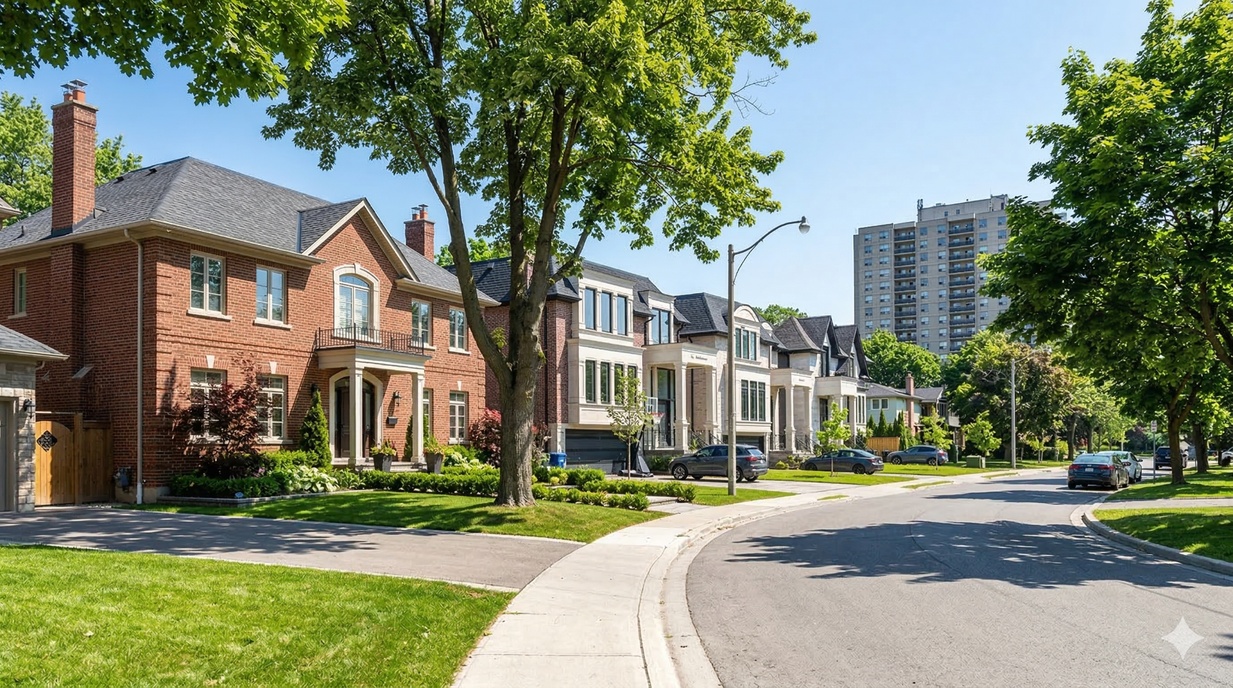
Willowdale West residential streets — original post-war bungalows sit alongside newer custom builds throughout the neighbourhood.
Transit in Willowdale — why it matters for property values
Three Line 1 stations, a Line 4 interchange, and a subway extension coming north from Finch. Willowdale's transit story is strong now and getting stronger.
Current Transit Connections
- North York Centre Station (Line 1) — at Yonge and Sheppard, the neighbourhood's main hub
- Sheppard-Yonge Station (Line 1 & 4) — interchange station, east-west and north-south access
- Finch Station (Line 1) — northern station with GO Transit and York Region Transit connections
- Multiple TTC bus routes running east-west along Sheppard, Finch, and cross-streets
- Highway 401 access via Allen Road and Leslie Street for drivers
Yonge North Subway Extension — What to Know
The Yonge North Subway Extension is a Metrolinx project that will extend Line 1 northward from Finch Station, adding new stations at Cummer, Steeles, Clark, Highway 7, and Richmond Hill Centre. When complete, it will significantly improve regional transit connections for buyers in the northern parts of Willowdale and the Newtonbrook area just north of Finch.
The extension is relevant to property buyers because it increases the long-term transit catchment around stations that are currently less connected — particularly between Finch and Steeles. Properties within a reasonable walk of future stations along this corridor have historically seen value appreciation as construction progresses. Confirm current project timelines with Metrolinx before factoring this into a purchase decision.
Schools in Willowdale — Earl Haig and the education draw
Earl Haig Secondary School is Willowdale's flagship public high school, ranked 23rd in Ontario by the Fraser Institute with a rating of 8.9 out of 10. It is a major driver of family demand for homes in the Willowdale catchment area. A.Y. Jackson Secondary School, serving the broader North York area, is ranked 30th in Ontario with an 8.5/10 rating. Strong school performance is one of the primary reasons families choose Willowdale over comparable North York neighbourhoods at similar price points.
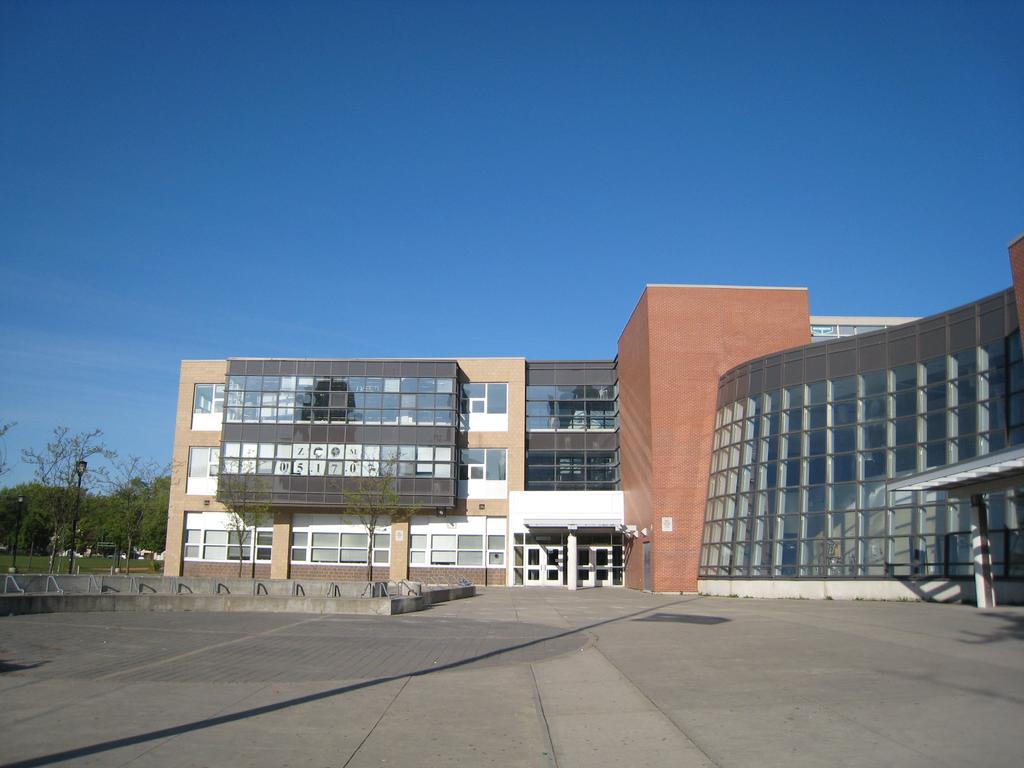
School quality is one of the primary reasons families choose Willowdale — Earl Haig SS is among the top-ranked public schools in Ontario.
Earl Haig is known for two things: strong academic performance and one of the best arts programs of any public high school in Toronto. The Claude Watson School for the Arts operates as a specialized program within the Earl Haig building at the elementary level, giving artistically inclined students a direct pathway into one of the top secondary arts programs in the province. This combination of academic strength and arts programming makes Willowdale unusual in the Toronto public school landscape.
Secondary schools (TDSB):
- Earl Haig Secondary School — 8.9/10 Fraser Institute rating, ranked 23rd in Ontario (2025)
- Drewry Secondary School — TDSB, serving the broader Willowdale area
- A.Y. Jackson Secondary School — 8.5/10 Fraser Institute rating, ranked 30th in Ontario (2025)
Elementary schools:
- Claude Watson School for the Arts — specialized arts program, JK–8, within the Earl Haig building
- Churchill Public School
- Avondale Public School
- Hollywood Public School
- Cummer Valley Middle School
- Willowdale Middle School — French Immersion available
Always confirm current school catchment boundaries directly with the TDSB before making a purchase decision based on school access. Boundaries change.
Living on Yonge Street in Willowdale — food, shopping, and what the neighbourhood actually feels like
Yonge Street north of Sheppard is one of Toronto's genuinely great food streets and it doesn't get nearly enough credit for it. The concentration of independent Korean, Persian, Chinese, Japanese, and fusion restaurants is exceptional — and unlike some of Toronto's trendy eating strips, most of these places have been there for years and earned their reputations through repeat customers, not social media hype.
Restaurants worth knowing:
- Noodle Legend — Chinese hand-pulled noodles, 4.9 stars from over 1,400 reviews
- Gol's Lanzhou Noodle — 4.8 stars from 2,627 reviews, one of Toronto's best noodle spots
- Grill Gate — Persian-influenced burgers, 4.8 stars from 1,500+ reviews
- Midori Ramen — Japanese ramen, 4.7 stars from 1,665 reviews
- Shamshiri Restaurant — Persian/Iranian, longstanding neighbourhood institution
- Bon Italia Trattoria — Italian, 4.6 stars from 937 reviews
- Café Landwer — Mediterranean, growing Toronto chain with strong quality
- Paisano's Italian Café — 4.2 stars from 1,761 reviews, neighbourhood staple
Shopping & services:
- Empress Walk — retail, cinema, and services at Yonge and Sheppard
- North York Civic Centre — government services, Douglas Snow Aquatic Centre
- Mel Lastman Square — public plaza with seasonal markets, concerts, and events
- North York Central Library — one of Toronto's flagship library branches
- Grocery options: Loblaws, Galleria Supermarket (Korean), and T&T nearby
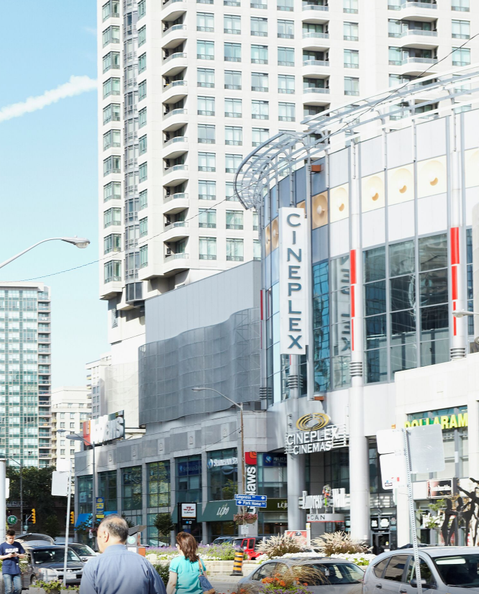
Yonge Street north of Sheppard is one of Toronto's most underrated food streets — independent restaurants reflecting the neighbourhood's multicultural character.
Parks & Green Space
- Edithvale Park & Community Centre — local hub for sports and programming
- Mitchell Field Community Centre (89 Church Ave) — ice arena, indoor pool, gymnasium, and community meeting rooms
- Willowdale Park — green space with tennis courts off Hollywood Avenue
- Lee Lifeson Art Park — named in honour of Rush members Geddy Lee and Alex Lifeson, both raised in Willowdale
- Avondale Park — neighbourhood park in the core residential area
- Edithvale Park — baseball diamonds and tennis courts
Arts, Culture & Community
The Meridian Arts Centre on Yonge Street is a major cultural anchor — one of Toronto's leading performance venues, hosting the Toronto Symphony Orchestra, major touring theatre productions (Sunset Boulevard, Barrymore with Christopher Plummer), and a full calendar of events. Mel Lastman Square adjacent to the Civic Centre functions as a year-round public gathering space, with a summer amphitheatre, skating rink in winter, and regular events and farmers markets.
Willowdale also has a strong education profile: 64% of adult residents hold a bachelor's degree or higher, and 82% have some postsecondary education. This is significantly above the Toronto average and reflects the community's long-standing draw for professional families and highly educated newcomers.
Density & the Urban Core
Willowdale is dense. The Yonge-Sheppard intersection and the blocks immediately around it have the energy of a secondary downtown — busy pedestrian traffic, constant construction, significant vehicle volume on Yonge and Sheppard. This is by design: the City of Toronto's "North York at the Centre" initiative is actively managing continued vertical growth around this transit node.
For buyers who want walkable urban convenience, this is a feature. For buyers who want a quiet residential feel, the side streets off Yonge deliver it — but the proximity to the Yonge corridor is always there. Understanding what you're buying into before you make an offer matters here.
Community Character
Over 55% of Willowdale West residents are immigrants and 63.7% identify as visible minorities. Korean, Chinese (Mandarin and Cantonese), Iranian, and South Asian communities are all significantly represented. This isn't incidental to what Willowdale is — it's what the neighbourhood is. The food, the community organizations, the schools, and the neighbourhood associations all reflect this.
Buyers who value multicultural community depth and want to live somewhere that has genuine cultural character — rather than a sanitized version of it — find Willowdale one of the most authentic options in the city at this price point.
What is the average home price in Willowdale Toronto?
As of early 2026, average sold prices in Willowdale were approximately $1,037,000 in Willowdale West (up 2.9% year-over-year) and $969,000 in Willowdale East (up 8.0% year-over-year). Active listing prices for condominiums average around $660,000, for townhomes around $984,000, and for detached homes approximately $1,122,000. Homes in Willowdale West are selling at a 96% sale-to-list ratio and in Willowdale East at 97%, meaning the market is balanced to slightly in favour of buyers relative to more competitive Toronto neighbourhoods. Average days on market: 32 in the west and 36 in the east. Source: Zolo.ca using TRREB MLS data, January–March 2026.
What the market conditions mean for buyers
A 96–97% sale-to-list ratio means homes are selling at or slightly below their asking price — meaningfully different from The Beaches or Leaside where bidding wars regularly push prices above asking. Willowdale gives buyers more room to negotiate, more time to conduct proper due diligence, and less pressure to make rushed decisions. This is especially important for condo purchases where status certificate review takes time.
Average days on market of 32–36 days is healthy but not frantic. Well-priced properties move. Overpriced properties sit. The market is functioning more rationally here than in some other Toronto neighbourhoods, which is actually good news for buyers who want to be thoughtful.
Is Willowdale a good investment?
Willowdale's investment case rests on several pillars: transit connectivity that is already excellent and improving, school quality that drives family demand, and a continuously growing urban core with City of Toronto backing. The 8.0% year-over-year appreciation in Willowdale East specifically suggests the east side is being re-rated by the market.
For the bungalow market specifically, the lot values have sustained even as the housing stock ages. Many Willowdale West lots are being purchased for teardowns, and custom home builders are consistently active in the area. If you're buying an older bungalow, understand whether you're buying it for the house or for the land — the strategy and due diligence are different in each case.
Who Willowdale is actually right for — and where the real trade-offs are
Willowdale works well for:
- Families who put school quality near the top of their criteria — Earl Haig's track record is real and the catchment area is well-defined
- Buyers who genuinely value transit access above neighbourhood aesthetics — three subway stations is a legitimately rare advantage in Toronto
- Seniors downsizing from a Willowdale bungalow who want to stay in their community and convert equity into a condo nearby
- Buyers who want walkable access to a diverse, high-quality restaurant and food scene at a lower price point than midtown Toronto
- Investors looking at the condo market with a long-term transit story and continued demand from the immigrant community
- New Canadians who want to live in one of Toronto's most established multicultural communities with strong cultural infrastructure
The honest trade-offs:
- Density and construction activity along the Yonge corridor are ongoing — if you want a quiet neighbourhood, the side streets deliver it but you'll hear the city from many locations
- Condo quality varies significantly — older buildings along Sheppard have aging infrastructure and higher maintenance assessments in some cases; status certificate review is non-optional
- The bungalow market is in transition — original homes in need of renovation sit next to teardown lots next to completed custom builds; the streetscape is uneven and will remain so for years
- Willowdale doesn't have the waterfront, ravine access, or neighbourhood character that drives premium prices in places like The Beaches or Leaside; it trades on transit, schools, and value
- The 401 creates a physical boundary that limits walkability and cycling north of Sheppard; the highway is psychologically close even if daily life rarely requires crossing it
Why Toronto Families Choose Othen Group
More than 90 five-star Google reviews, many from families navigating major life transitions in the Toronto market.
"Jacquie and her team of professionals are in my opinion the best in Toronto. She sold my home in a timely fashion and supported me throughout the whole process — every step of the way by going above and beyond and relating to me as if she was my own daughter."
Google Review — Toronto
"She emanates a sense of trustworthiness that makes you feel very secure during what is without a doubt a very involved process. Jacquie is a true professional in every sense of the word, and puts her clients interests far above her own."
Google Review — Toronto
"Jacquie and her team are awesome and they patiently guided us through this stressful transaction. I would have no hesitation in recommending Jacquie to any of my friends and family."
Google Review — Toronto
"With their help, our house sold almost immediately, for a little over asking. The whole team was incredibly responsive and professional from start to finish. We can't thank them enough!"
Google Review — Toronto
Common Questions About Willowdale Real Estate
Why is it called Willowdale?
The name comes from the "Willow Dale" post office established by David Gibson in the mid-1800s, named after the many willow trees that once covered the area. The neighbourhood was previously called Kummer's Settlement after Jacob Cummer, who settled here from the United States in 1797 and is considered Willowdale's first settler. Gibson's farmhouse, built in 1851, still stands at 5172 Yonge Street as a historic house museum.
What is the difference between Willowdale East and Willowdale West?
Yonge Street divides the two. Willowdale West is more residential in character with more ground-level housing — original bungalows, raised bungalows, and custom builds. Willowdale East is more urban, with higher condo density concentrated along the Sheppard Avenue East corridor near the subway. Average sold prices in early 2026 were approximately $1.04M in the west and $969K in the east. Buyers looking for a house with a yard generally look west; condo buyers with immediate subway access as a priority generally look east.
What is the average condo price in Willowdale Toronto?
Active condo listings in Willowdale in early 2026 ranged from approximately $400,000 to $1,748,000, with an average listing price around $660,000. Average days on market for condos in the broader area is approximately 31–36 days. The sale-to-list ratio of 96–97% means buyers have more room to negotiate than in many other Toronto markets. Building quality varies significantly — always review the status certificate before making an offer.
Is Earl Haig Secondary School in Willowdale?
Yes. Earl Haig Secondary School is located in the Willowdale neighbourhood and is the primary feeder high school for the area. It is ranked 23rd in Ontario by the Fraser Institute with a rating of 8.9 out of 10, making it one of the top-ranked public secondary schools in the province. School catchment boundaries should be confirmed directly with the TDSB before purchasing, as they can change.
Is Willowdale a good neighbourhood in Toronto?
Yes, for the right buyer. Willowdale offers exceptional transit access with three Line 1 subway stations and a Line 4 interchange, top-ranked public schools including Earl Haig SS, strong walkability (Walk Score 86), and one of the best independent restaurant strips in North York. Trade-offs include ongoing construction density along the Yonge corridor, variable condo building quality, and a streetscape that is in active transition. It is particularly well-suited to families prioritizing schools and seniors downsizing within the same community.
What is the Yonge North Subway Extension?
The Yonge North Subway Extension is a Metrolinx project to extend Line 1 north from Finch Station, adding new stations at Cummer, Steeles, Clark, Highway 7, and Richmond Hill Centre. When complete, it will improve regional transit for Willowdale residents in the northern portion of the neighbourhood and the Newtonbrook area, and may support property value appreciation near future stations. Confirm current timelines directly with Metrolinx, as project schedules have evolved.
Is Willowdale good for downsizing in Toronto?
Yes, particularly for homeowners already in the neighbourhood. Willowdale has a very specific downsizing scenario that plays out often: seniors in post-war bungalows selling to move into a nearby condo, staying in their community while freeing up substantial equity. The transit score of 84 supports car-light or car-free living, the Walk Score of 86 means daily needs are accessible on foot, and the condo market offers a range of price points. We specialize in this exact transition and have guided many families through it.
Buying or selling in Willowdale — what working with Othen Group looks like
Willowdale has specific nuances that matter more here than in other Toronto neighbourhoods. The East/West split. The bungalow versus condo decision. The building-specific issues in older condo stock. The school catchment boundaries. Getting these right before you commit to a property saves significant problems later.
For sellers, the staging difference matters in Willowdale's condo market because many listings look identical. Free professional staging through Kelly Allan Design is included with every listing we take on — and in a market where buyers are comparing 30 listings in a building, presentation does the work that price alone can't.
How we help in Willowdale specifically:
- SRES certification — specialized experience with the bungalow-to-condo transition seniors in Willowdale navigate regularly
- Free professional staging through Kelly Allan Design on every listing
- Partnership with Downsizing Divas for packing, sorting, and move coordination
- Condo due diligence support — status certificate review, reserve fund assessment, building history
- Full vendor network: estate lawyers, movers, financial planners, trades — one point of contact handling everything
- Honest neighbourhood knowledge — which buildings have issues, which streets to prioritize, what the catchment lines actually are

One conversation gives you clarity on what your budget gets you in Willowdale today — and what move makes sense for your situation.
Thinking About Willowdale? Let's Talk.
Whether you're buying, selling, downsizing from a bungalow, or figuring out which side of Yonge makes more sense for your life — one conversation gives you a clear picture of what Willowdale looks like for your specific situation.
Or email: jacquie@othengroup.com