
The Beaches, Toronto: More Than a Postcard
Boardwalk, Queen Street, Victorian front porches, and a community that genuinely feels like a small town sitting inside a major city. The Beaches is one of Toronto's most coveted neighbourhoods — and one of its most misunderstood. Here's the honest picture.
Talk to Us About The Beaches
Buying, selling, or downsizing — tell us what you're working with.
Or call 416-486-8282
What is The Beaches neighbourhood in Toronto?
The Beaches — also called "The Beach" by locals — is a lakefront neighbourhood in Toronto's east end, running from Coxwell Avenue west to Victoria Park east, with Kingston Road as the northern boundary and Lake Ontario to the south. It is known for its four public beaches, the 3.2km boardwalk along the waterfront, Queen Street East's walkable commercial strip, and residential streets lined with Victorian, Edwardian, and original wood-frame cottages. It consistently ranks as one of Toronto's most desirable neighbourhoods to live in, with a Walk Score of 95 and a Bike Score of 93 — two of the highest in the city. Real estate is competitive and expensive, with homes regularly selling over asking.
The four beaches are Woodbine Beach, Kew-Balmy Beach, Balmy Beach, and Cherry Beach. Woodbine is the largest and draws the biggest summer crowds. Kew-Balmy, tucked further east, tends to attract locals who want more of a neighbourhood feel and less of a destination beach experience. The boardwalk connects them all and is genuinely one of Toronto's great public assets year-round — not just in July and August.
The neighbourhood has a strong identity and an equally strong community. Residents tend to stay. Turnover is low relative to comparable Toronto neighbourhoods at similar price points, which tells you most of what you need to know about what it's like to live there.
Downsizing in The Beaches? Condo inventory along Queen Street and the lakefront is modest but growing. See our Toronto Downsizing Guide for a full picture of what the transition looks like financially and logistically.
What is the Beach Triangle in Toronto?
The most asked-about micro-area in the neighbourhood — and the one that gets the most confused with the broader Beaches.
The Beach Triangle refers to a specific sub-section of The Beaches bounded by Queen Street East to the north, Woodbine Avenue to the west, and the lake to the south. It's the original residential heart of the neighbourhood — the streets most people mean when they say they want to live "in The Beach."
Within the Triangle, streets like Kippendavie Avenue, Fernwood Park Avenue, Balsam Avenue, and Silver Birch Avenue are the most sought-after. You're within walking distance of the boardwalk, Queen Street, Kew Gardens, and the beach itself. Properties here carry a premium even within the already-premium Beaches market, and they move quickly when they come up.
Outside the Triangle — north of Queen Street, or east toward Victoria Park — prices moderate somewhat and inventory is more available. It's still The Beaches, still a great neighbourhood, but buyers who are specifically looking for the boardwalk-close experience should understand the distinction before starting their search.
Key Triangle streets:
- Kippendavie Avenue — one of the most desirable streets in the entire neighbourhood
- Fernwood Park Avenue — mature trees, original character homes, very limited turnover
- Balsam Avenue — quiet residential, walking distance to beach and boardwalk
- Silver Birch Avenue — runs directly to the lake, strong community character
- Glen Manor Drive — ravine access, larger lots, architecturally diverse
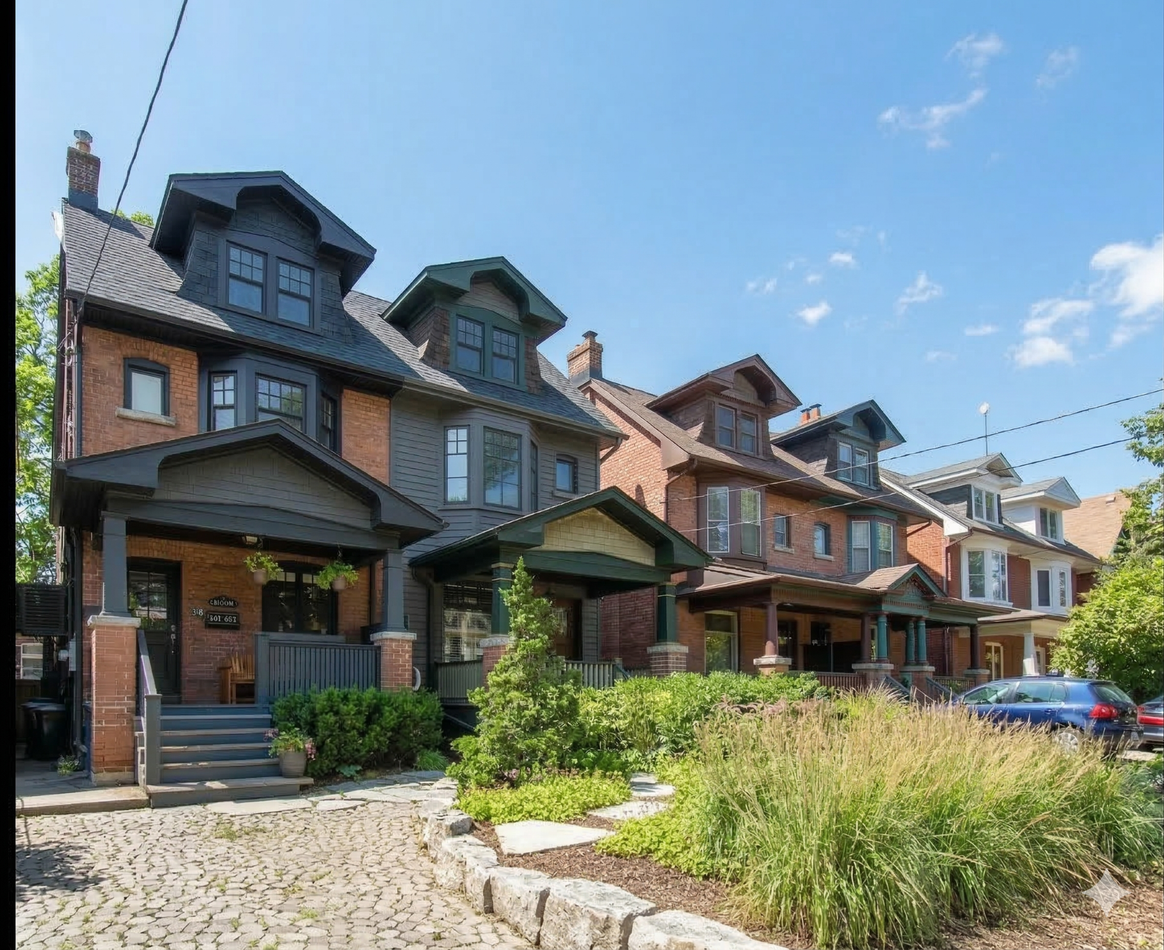
The Beach Triangle — the streets between Queen St E, Woodbine Ave, and the lake — command a premium even within The Beaches.
What do homes in The Beaches look like?
The housing stock is one of the most architecturally varied in Toronto — original cottages and Victorian character sitting beside modern custom builds on the same block.
Victorian & Edwardian Homes
The dominant architectural character of The Beaches comes from late Victorian and Edwardian homes built from the 1880s through the 1920s. Large-scale Victorians with dramatic front porches, decorative woodwork, and bay windows. Edwardians with broader frontages and more restrained ornamentation. These are the homes that define the neighbourhood's identity and typically command the strongest prices.
Original Wood-Frame Cottages
Some of the original wood-frame cottages built when The Beaches was a summer resort community in the late 1800s still survive. Many have been updated and modernized while preserving their character. These smaller-footprint homes represent the neighbourhood's history as a seasonal getaway before it became a year-round residential community — and they remain genuinely charming rather than quaint for the sake of it.
Modern Builds & Teardowns
A significant number of original homes have been torn down and replaced with custom builds. The best of these respect the neighbourhood's character — maintaining porch culture, setback lines, and material compatibility. The worst are generic boxes that feel imported from a subdivision. This tension between preservation and development is ongoing in The Beaches, and the community association is actively engaged in it. Worth understanding before you buy.
Condos & Townhomes
Condo inventory in The Beaches is modest compared to midtown. Most condo buildings are low-rise and mid-rise, concentrated along Queen Street East and Kingston Road. Active listings in early 2026 range from approximately $628,000 to $829,000. Townhomes sit around $999,000. For buyers coming from a condo mindset, the inventory at any given time is limited — patience and off-market awareness matter here more than in higher-supply neighbourhoods.
What the Porch Culture Tells You
The Beaches has an unusually high ratio of front porches — wraparound, tiered, layered — for a Toronto neighbourhood. This is not accidental. It reflects a community where people actually sit outside and interact with their neighbours. If you want privacy and anonymity, The Beaches may not be the right fit. If you want to actually know the people on your street, it might be one of the best neighbourhoods in the city for it.
Transit and walkability in The Beaches
A Walker's Paradise and a Biker's Paradise by the numbers — but transit to downtown has always been The Beaches' honest limitation. Here's the real picture.
Transit Access
- Queen streetcar (501) — the primary transit connection, runs east-west along Queen Street East
- Woodbine subway station (Line 2 Bloor-Danforth) provides north-south access from the western edge of the neighbourhood
- Kingston Road bus connects to the northern boundary
- Martin Goodman Trail — 56km multi-use trail running the full waterfront, directly accessible from The Beaches
- Relatively quick car access to Lakeshore Blvd, the Gardiner Expressway, and the Don Valley Parkway
The Honest Transit Picture
The 95 Walk Score reflects how self-contained The Beaches is as a neighbourhood — Queen Street handles nearly everything on foot. But the transit score of 72, while solid, tells a different story about getting downtown. The Queen streetcar is the primary option and it's notoriously slow at peak hours.
The real-world implication: many Beaches residents tell you they stopped needing to leave the neighbourhood regularly. That's both a feature and a limitation. If your work requires a fast downtown commute, this needs to be part of your calculation before you buy.
Living on Queen Street East — what The Beaches looks like day to day
Queen Street East is one of Toronto's great neighbourhood high streets — independent businesses, local cafes, restaurants that have been there for years, and very little of the chain homogeneity that has taken over other Toronto commercial strips. It runs the full length of the neighbourhood and handles most of what daily life requires without getting in a car.
Where locals eat:
- Limon Beaches (1968 Queen St E) — Israeli, 4.6 stars from over 1,200 reviews
- Restaurant Tiflisi (1970 Queen St E) — Georgian cuisine, 4.7 stars
- Breakwall BBQ & Smokehouse (1910 Queen St E) — 4.6 stars from 1,579 reviews
- Delina Restaurant (1891 Queen St E) — Mediterranean, 4.8 stars
- Sauvignon Bistro & Bakery (1862 Queen St E) — French, neighbourhood dinner favourite
- Inmigrante (1959 Queen St E) — 4.5 stars, locally beloved
- ViVetha Bistro (2485 Queen St E) — Italian, east end of the strip
- Outrigger (2232 Queen St E) — Canadian, strong local following
Coffee:
- Judy's Beach Café — 4.9 stars, neighbourhood staple
- ESPRO Coffee Bar — 4.9 stars, widely praised for quality
- Simple Coffee — 4.8 stars, relaxed atmosphere
- Paper Route Café — 4.7 stars, popular local stop
- Bud's Coffee — 4.6 stars, artisanal, welcoming
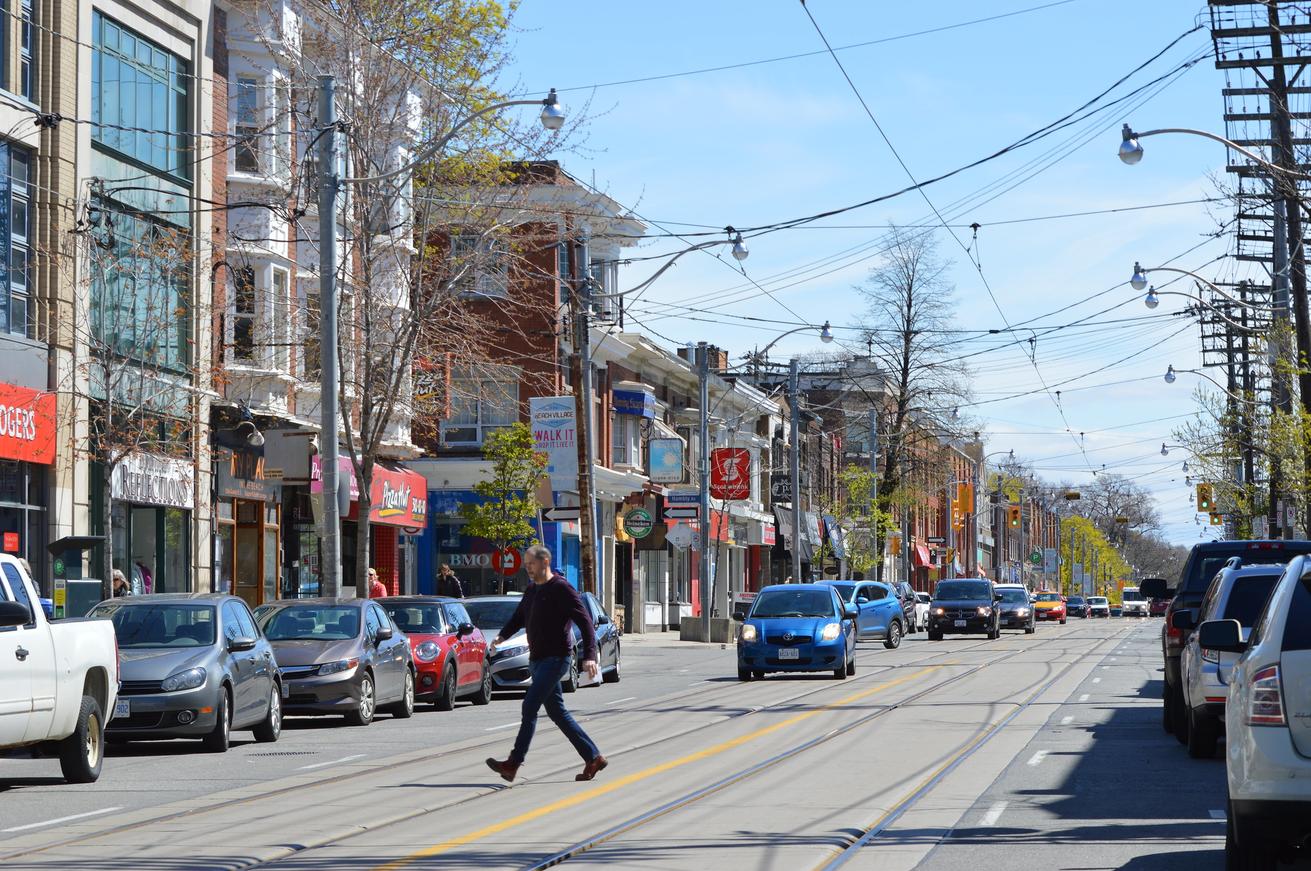
Queen Street East is one of Toronto's most intact independent commercial strips — a full neighbourhood within the neighbourhood.
The beaches, boardwalk, and green space
The waterfront is the reason the neighbourhood exists. Here's what's actually there and what to know before assuming it's all sunny beach days.
Woodbine Beach
The largest of the four beaches, with volleyball courts, a snack bar, and the most facilities. Popular in summer with both residents and visitors from across the city. The busiest on weekends — if you want a quiet beach experience in July, this is not where you go. But the volleyball culture and energy make it genuinely fun in ways a quieter beach isn't.
Kew-Balmy Beach
The neighbourhood beach for people who live here. Quieter, more residential in feel, home of the Balmy Beach Club. Kew Gardens sits behind it — a large park that hosts the annual Beaches International Jazz Festival every July, one of Toronto's longest-running free outdoor music events. The surrounding streets are some of the most desirable in the city.
The Boardwalk & Martin Goodman Trail
The 3.2km boardwalk is one of Toronto's genuinely great public spaces year-round, not just in summer. The Martin Goodman Trail connects it to the broader waterfront trail system. Cyclists, runners, walkers, and dog owners all use it daily. The quality of life this creates is real and accounts for a meaningful portion of why people pay what they pay to live here.
Kew Gardens & Community Parks
- Kew Gardens — large park with mature trees, hosting the Beaches Jazz Festival annually
- Balmy Beach Park — playground, dog park, direct beach access
- Glen Manor Ravine — ravine trail system running through the neighbourhood to the lake
- Donald D. Summerville Olympic Pool — outdoor pool at the western end of the Beaches
The Summer Crowd Reality
The Beaches is a Toronto destination in summer, not just a residential neighbourhood. That means road closures during Jazz Festival, significant pedestrian and car traffic on Queen Street and along the waterfront, and limited street parking from June through September.
Residents mostly accept this as the price of admission and tend to lean into the neighbourhood's energy rather than fighting it. But it's worth knowing before you buy, particularly if you're coming from somewhere quieter.
What is the average house price in The Beaches Toronto?
The Beaches is one of Toronto's premium real estate markets. As of Q3 2025, the overall average sold price across all property types was approximately $1.66 million. Detached homes averaged $2.45 million. Semi-detached homes averaged $1.42 million. Condominiums averaged $798,000. Townhomes averaged $1.23 million. Homes sell over asking — the sale-to-list ratio was 103% for all properties in Q3 2025, with detached at 103% and semis at 107%. The Beaches is not an entry-level market in any category.
Market Conditions
The Beaches is a genuinely competitive market. Detached homes averaged 17 days on market in Q3 2025. Semi-detached homes also moved in 17 days on average, with a 107% sale-to-list ratio — meaning bidding wars are common on well-presented semis. Condos moved more slowly at 31 days average. Townhomes at 38 days average, suggesting buyers at that price point have more options and less urgency.
Active listings tend to be limited relative to demand — the neighbourhood's low turnover culture means good properties are rare and the market responds accordingly when they appear.
Is The Beaches a good investment?
The Beaches has a strong long-term track record. Low turnover, consistent demand, a waterfront location that cannot be replicated elsewhere in Toronto, and a community character that sustains value regardless of broader market cycles. It's not cheap to enter and it's not a speculation play. It's a neighbourhood people buy into for the long term, and the market reflects that.
The condo market is more volatile relative to detached and semi-detached because it competes with supply across a wider area. For condos specifically, building quality and management matter — due diligence on the status certificate before making any offer.
Schools serving The Beaches
A family-oriented neighbourhood with well-regarded schools and a level of parent engagement that shows up in school culture and performance.
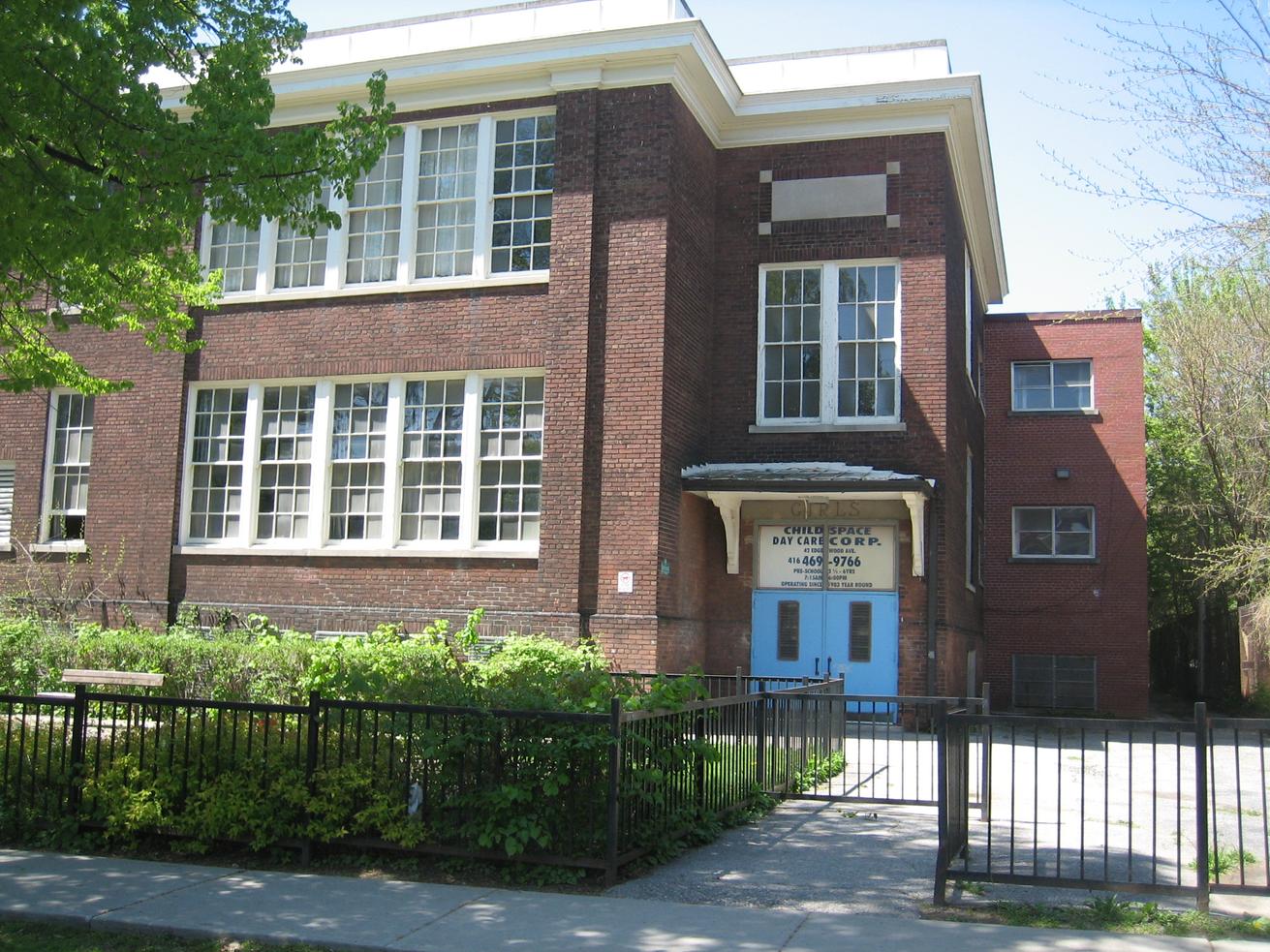
The Beaches draws families who want strong schools, outdoor access, and a genuine community feel — all on the same street.
School quality is a significant draw for families in The Beaches. The level of community participation in local schools is high, and it shows. Confirm school boundaries with the Toronto District School Board before purchasing — boundaries change.
Elementary schools (TDSB):
- Kew Beach Junior Public School — well-regarded, central to the neighbourhood
- Balmy Beach Community School — strong community involvement
- Williamson Road Junior Public School — highly rated, slightly north of the core area
- Beaches Alternative School — alternative education approach within the public system
- École élémentaire La Mosaïque — French-language public school serving the area
Secondary schools:
- Malvern Collegiate Institute — the primary feeder secondary school for the neighbourhood
- Monarch Park Collegiate Institute
- Riverdale Collegiate Institute
- Collège français secondaire — French-language secondary
Catholic:
- St. John Catholic School (JK–8) — Toronto Catholic District School Board
Always confirm current school catchment boundaries directly with TDSB and TCDSB before making a purchase decision based on school access.
Who The Beaches is actually right for — and who should look elsewhere
After years working Toronto real estate, here's my genuine read. The right fit matters more than the sale.
The Beaches is genuinely right for:
- People who actually want to live by the water and use it — not just say they do
- Families who value community character, outdoor access, and walkability as non-negotiables
- Buyers who want a self-contained neighbourhood where they won't need to leave for most of daily life
- Long-term holders — low turnover and waterfront scarcity make this a strong long-term hold
- Downsizers who want to stay in a community-oriented neighbourhood with growing condo options near the water
- People who genuinely enjoy the energy of a busy neighbourhood in summer rather than being bothered by it
The real drawbacks — don't skip this:
- Price is the primary barrier — $2.45M average for detached homes means this is not accessible to most buyers
- Downtown commute by transit is slow — the Queen streetcar at peak hours is a real limitation if you work downtown daily
- Summer crowd pressure — road closures, Jazz Festival traffic, and packed streetcars are the trade-off for living somewhere people want to visit
- Condo inventory is thin — if you're specifically looking for a condo, you'll have limited choices at any given time
- The neighbourhood's insularity can work against you — Beaches residents often don't want to leave, which means the community can be inward-looking
How The Beaches compares to nearby neighbourhoods
Vs. Leslieville: Leslieville is more accessible price-wise, younger demographic, stronger restaurant and bar scene, but no waterfront and less of an established residential character. For buyers priced out of The Beaches, Leslieville is the most common alternative.
Vs. Riverdale: Riverdale offers similar Victorian housing stock and community feel with better transit (Broadview and Pape on Line 2), lower prices, and closer proximity to downtown. Less waterfront access, less of the summer energy.
Vs. Birch Cliff: East of Victoria Park, Birch Cliff is the Beaches adjacent neighbourhood for buyers who want the feel at a lower price point. Smaller, less commercial strip, but genuine community character.
Is The Beaches good for downsizing in Toronto?
The Beaches works well for downsizers who want to stay in a community they know or move to a neighbourhood with genuine waterfront lifestyle. The boardwalk, Queen Street walkability (95 Walk Score), and community feel are real and lasting.
The main challenge is thin condo inventory at any given time and prices that don't leave room for a bargain. Condos range from approximately $628,000 to $829,000 — limited selection but meaningful equity unlock potential for someone selling a Beaches house to move into one.
Working with an agent who knows what's coming to market before it's publicly listed matters more in The Beaches than in higher-inventory neighbourhoods.
Why Toronto Families Choose Othen Group
More than 90 five-star Google reviews, many from families navigating major life transitions in the Toronto market.
"Jacquie and her team of professionals are in my opinion the best in Toronto. She sold my home in a timely fashion and supported me throughout the whole process — every step of the way by going above and beyond and relating to me as if she was my own daughter."
Google Review — Toronto
"She emanates a sense of trustworthiness that makes you feel very secure during what is without a doubt a very involved process. Jacquie is a true professional in every sense of the word, and puts her clients interests far above her own."
Google Review — Toronto
"Jacquie and her team are awesome and they patiently guided us through this stressful transaction. I would have no hesitation in recommending Jacquie to any of my friends and family."
Google Review — Toronto
"With their help, our house sold almost immediately, for a little over asking. The whole team was incredibly responsive and professional from start to finish. We can't thank them enough!"
Google Review — Toronto
Common Questions About The Beaches Real Estate
What is the average house price in The Beaches Toronto?
As of Q3 2025, detached homes in The Beaches averaged $2.45 million. Semi-detached homes averaged $1.42 million. Condominiums averaged $798,000. Townhomes averaged $1.23 million. The overall average across all property types was approximately $1.66 million. All categories were selling at or above asking price.
Is The Beaches called "The Beach" or "The Beaches"?
Both are used. "The Beaches" is the official City of Toronto neighbourhood name, referring to the four public beaches along the waterfront. "The Beach" is what many long-time residents and locals call it. Either is correct and both are widely understood. The neighbourhood takes its name from Woodbine Beach, Kew-Balmy Beach, Balmy Beach, and Cherry Beach.
What is the Beach Triangle in Toronto?
The Beach Triangle is the most desirable sub-area within The Beaches, bounded by Queen Street East to the north, Woodbine Avenue to the west, and Lake Ontario to the south. Streets like Kippendavie Avenue, Fernwood Park Avenue, Balsam Avenue, and Silver Birch Avenue sit within it. Properties here carry a premium even within the already-premium Beaches market and move quickly when they come to market.
How long does it take to sell a home in The Beaches?
Detached and semi-detached homes averaged 17 days on market in Q3 2025 and regularly sold over asking. Condos averaged 31 days, townhomes 38 days. Well-prepared and properly priced homes move quickly — the sale-to-list ratio of 103% overall and 107% for semis tells you there's genuine competition when good properties come to market.
Is The Beaches good for families?
Yes. The Beaches is consistently one of Toronto's top family neighbourhoods. Excellent elementary schools, abundant outdoor space and waterfront access, a self-contained Queen Street commercial strip, and a community feel that makes it easy to know your neighbours and build a life in one place. The trade-off is the price of entry.
What is the transit like in The Beaches?
The Queen streetcar (501) is the primary transit option and runs east-west the full length of the neighbourhood. Woodbine subway station (Line 2) is accessible from the western boundary. The transit score of 72 reflects good local coverage, but getting to downtown Toronto by streetcar takes longer than subway-connected neighbourhoods — this is The Beaches' most commonly cited practical limitation. Driving to the Gardiner or DVP is faster for many residents.
Buying or selling in The Beaches — what working with Othen Group looks like
The Beaches rewards buyers who understand what they're actually looking for and have an agent who knows the difference between a Triangle-area listing and one north of Kingston Road. The gap in lifestyle experience between those two is real, and we'd rather help you understand it before you fall in love with a listing that isn't what you thought it was.
Whether you're buying a family home near the boardwalk, downsizing to one of the Queen Street condos, or selling a property you've held for decades, the strategy looks different in each case. We'd rather spend 30 minutes understanding your situation than send you listings that don't fit your life.
How we can help:
- SRES designation — trained specifically for life-stage transitions and senior downsizing
- Free professional staging through Kelly Allan Design on every listing
- Deep neighbourhood knowledge — what's Triangle, what's not, which streets are worth the premium
- Full coordination: estate lawyers, movers, organizers, financial planners — one point of contact
- Partnership with Downsizing Divas for packing, sorting, and full move coordination
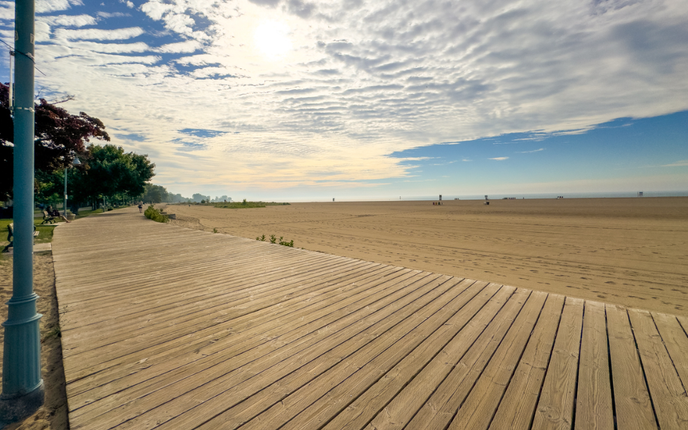
A 30-minute conversation gives you clarity on what your budget will actually get you in The Beaches today.
Thinking About The Beaches? Let's Talk.
Whether you're buying, selling, downsizing, or relocating — a 30-minute conversation gives you an honest picture of what The Beaches looks like for your specific situation, what your budget will actually get you, and what to do first.
Or email: jacquie@othengroup.com
GET IN TOUCH
0 Properties

- Reset all filters or remove one of your filters above to see more properties